Monday, March 11, 2013

Starting Out #8: From blog to job


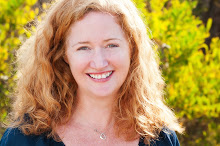
Today's Starting Out post is by the one and only Maxabella, who began her blog Maxabella Loves around three years ago, and started as the editor of Kidspot's Village Voices about 12 months ago. Here she shares her story about how her blog helped her leave the 'Grey World' of corporate life for a fulltime job as an editor and freelance blogger.

How I went from 'blog' to 'job'
I’ve had one kind of job or another since I was 12 years old. Nearly 30 years of working for someone or another, over eight of those years as a ‘working mother’. (Incidentally (and entirely off the point), I always put quote marks around ‘working mother’ because I think all mothers are working. Working and working and working. It’s gotta be a joke when they add ‘working’ just because a mother gets paid, right?)

Sorry. Al wanted me to write about how I went from being a corporate marketer with a blog to a full time blogger and editor (still with a blog) and I can’t help but feel that I’m mucking up the brief by writing a really passionate, but not terribly well written, piece about motherhood – or is it about working life? You’ll be reading this thinking (as you should, but not for this reason) “man, if that lady can get a paid writing gig then anyone can get a paid writing gig”.

Which brings me to my point (finally): anyone can get a paid writing gig. It just depends on the kind of writing they want to do.

Two years after I started my blog, I left my corporate marketing job and set myself up as a ‘freelance blogger’. (Again with the quote marks, but this time it’s because even after a year I am still not confident enough as a writer to call myself one without them.)

I got some paid work with a few different clients and Kidspot was one of them. My writing on Kidspot led to more writing that led to me becoming the Editor on Kidspot’s Village Voices about three months after I left my marketing job.  Yes, it was that fast. There’s a lot of luck involved here, but there are a few things I think I did and do that I think let Lady Luck walk right on in.

1.     Know what’s out there
So, I might have made up the ‘freelance blogger’ job title – but freelance writer didn’t seem right. I’m basically a blogger who decided not to be a marketer, but rather be a writer. Let me explain. When you decide you want to make money from blogging, these days you have two options – either sell advertising space (either by banner ads or sponsored posts) on your blog; or start blogging elsewhere for someone who will pay you.

To me, going down the advertising route felt way too much like my old marketing job. Working with ad agencies, writing content for brands, worrying about the numbers. Blogging elsewhere meant I’d be working with editors, writing content for readers, worrying about the muse.

Both are good ways to make blogging your career, just different.

2.     Be self-aware
Like most of us, I’ve always been a writer. I’ve kept a journal, I’ve written essays, I’ve written short stories, I’ve written countless marketing spiels and reports. People always told me that I was a really good writer and I’d nod and smile and go back to work. The only reliably paid writing I knew about was writing magazine or newspaper articles and I’m no journalist. My writing style is not objective enough, I’m much better at imagining than researching and, besides, I have the attention span of a midge. When I discovered blogging, I knew I’d found the kind of writing that worked for me.

3.     Be the best you can be
The craft of writing and the study of people have been my whole life, really. Years ago I did my Arts degree with three majors:  English Literature, Anthropology and Psychology and it’s no surprise that I ended up being responsible for all the marketing copy in a huge organisation. What makes words and people tick have always been my thing. Blogging allows me to bring my two fascinations together in a most satisfying way. I really think that if you want to do something well, you’ve got to be ridiculously passionate about it and you’ve got to constantly work to feed your raving appetite for it.

4.     Stand out from the crowd
I could never be one of those people who writes incognito. My writing style is all my own – I write like I talk, but more than that, I write like I think. A strong, clear writing style lets editors know what kind of writing they’ll get when they work with you. Your writing style can be your whole marketing plan.

5.     Draw the crowd in
I’m a hopeless blogger, really. I don’t tweet, I don’t Instagram, stumble or even respond to the comments left on my blog. I started a Facebook page about a year ago, but I’m seriously bad at it. I Pin, but, let’s face it, pinning is probably the least social social media platform ever.

So I am at loss to explain why I’ve always had a very friendly and connected community on my blog. The only thing I can put it down to is that the things I write about are very engaging and I’m genuinely interested in what people have to say about what I have to say about it. I’m proof that you don’t necessarily need all the social media add-ons to have a lovely social media network- you can convey all the warmth and love you need in your writing style alone.

6.     Be reliable
If you want to write more than once for an editor, make sure you write what you said you’d write when you said you’d write it by. A good work ethic is important in any job.

7.     Believe and leap
There’s no other way to find out if you can do it. If you want to be paid for your blogging, you need to put your hand up and send off some of your work to the editors that are out there. Don’t send them ideas for posts you think they’ll like, send them posts you’ve already written and tell them what you can write about. Your blog is your online portfolio – make sure it showcases what you’re capable of and then go for it.

You'll find Maxabella on her blog, at Village Voices, at Live4.com.au, and, sometimes, on Facebook.

If you like this Starting Out post, you might also enjoy: So You Want to Be a Freelance Writer?, What kind of writer will you be? and Learning to embrace the editing process.

Would you like to turn your blog into a job? Or do you prefer to keep it as your 'happy place'?

Friday, March 8, 2013

Fibro Q&A: How do you write a memoir?

The Australian magazine industry is a relatively small place. You can work with people on one magazine, not hear from them for years, and then, voila!, up they pop on another title you're writing for. Georgia Cassimatis is one of those names that you will have seen in women's magazines around the country. We first met many years ago at Cosmopolitan and then she disappeared, while her byline lived on. As it turns out, she'd moved to LA. And a whole lot of life ensued. Which she has now written about in her first book Red Carpet Burns (is that cover gorgeous or what?).

I admire people who write memoir. It takes a lot of courage to write one well because you have to be brave enough to leave in the 'warts and all'. So I invited Georgia to the Fibro to answer my two most burning questions about memoir - where do you start and how do you decide what to put in and what to leave out? She even answered a few extras as well. 

Why did you choose to write memoir?
Georgia Cassimatis: "There were a few things that inspired me. When I was 30 I met and married a guy who I thought was ‘the one’ and moved my entire life, from Sydney to Los Angeles, to be with him - only to realise that he wasn’t. I had wondered if other women had gone through something similar: ‘the one’ turning out to be ‘oh so wrong’. Not to mention I was also going through all of this against the backdrop of Los Angeles: a place that people are curious about and which turned out to be amazing (and tough) in many surreal ways.
"On top of that I had also completely underestimated what moving to another culture meant. Then I started reading travel memoirs from other people who who had gone through culture shock (like I had) and that clarified how hilarious and frustrating, yet self-defining, it can be. But these were women who had moved mostly to Paris, Europe and Asia. No one had ever spoken about living in Los Angeles through the eyes of a writer or through someone who had gone for love - most LA memoirs are from actresses who never made it, or celebrity tell-alls, not travel memoirs so to speak.
"When I left my ex-husband and started my LA journey on my own, that's when the true magic there began: I met beautiful, inspiring, amazing people, my work picked up as a journalist and I started interviewing A-list celebrities for movies and travelling to exotic locations for travel stories. I had all these incredible, surreal experiences that I never wanted to forget. For me, the only way I could immortalise all those experiences was in a book."

Did you ever find yourself feeling constrained by the idea of who would be reading the book (eg Mum, people who might be mentioned)? How did you deal with that?
GC: "The only two people I was concerned about were Mum and Dad, because they’re in it and I didn’t want them to be offended. Other than mum telling me to tone down the swearing, they were fine with all of it. It is funny because aunts and uncles are reading it and they're calling my parents saying things like 'Georgia appeared naked in a university play? We never knew!' But, memoirs are truth. If you eliminate things because you’re concerned about what people think, it becomes beige and boring. Deep down people want to read because they’re after a truth."

Is the key to memoir as much deciding what to leave out as it is deciding what to put in?
GC: "A memoir is really about those key moments, experiences and people who inspire you in all different ways (good and bad) and propel you on your journey. So for me it was easy to figure out what I wanted to keep in and leave out. It's more about the details of a scene and editing those down for it to be entertaining or compelling that I found harder. My book editor said to me 'there are too many 'you have to be there moments', which she pulled me back on and tightened things up. In that respect it's great having an editor! It also helps to know that most books are between 80,000 to 120,000 words which always helps with your editing process."

How did you decide where to begin? Is the structure of a memoir an important tool in making the book sing? How did you nut it out?
GC: "Interesting you ask me actually! At first I started my book chronologically: when I was 18, I had an 'epiphany' that I’d be working in the USA in ten years. So I started from the beginning, writing about my initial, fleeting fascination with the USA. But when my agent was shopping my book around to various publishers, one said 'we really like it but we want to see her start from the end of her journey looking back over her time in LA. We'd like to see her start with the sentence 'Well here I am in LA….'"
"Even though we didn’t end up going with that publisher, I kept that rewrite because I preferred it, and that scene became the prologue. I then started the first chapter talking about my first fleeting thoughts as an 18-year-old schoolgirl, seeing myself living in the USA. So where to begin can be a work in progress. It may be a scene that triggered the desire to write a memoir, it may be chronological - it all depends.
"The best advice I got about structure was from a friend of mine, who has written and directed films in LA, and who sat me down and said ‘right – give me the entire chapter outline of your book starting with the title for chapter one….’. We got up to about chapter 16, by which time I had a rough outline for the entire book!"

What are your three best tips for anyone who is writing or wants to write a memoir?
GC: "If you have ideas for a memoir, start writing them down in a big notebook. Fleeting thoughts, ideas, quotes, comments people say that resonate are crucial to document. Start filing, filing and filing! I remember doing courses in LA that I felt I wanted to write about, so I kept the course notes... and then revisited them when I started writing my memoir about all my crazy, whacked out, amazing LA experiences. I also had notebooks full of quotes people had said over the years. They're like your research tools as well as helping you to shape characters.
"I also started thinking of fun chapter headings and kept notes on those too - when you have chapter ideas and chapter outlines worked out, you have a great framework for your book. My idea was to use quotes from celebrities I had interviewed to go with each chapter header. To mix it up, I also used the fortune cookie messages I'd kept over the years from a cool Chinese restaurant I used to eat at in LA. So you can look for ways to make your chapter headlines and quotes fun – which I found inspirational for when I ‘officially’ started the writing journey.
"It also helps to know that publishers and agents like to see three chapters fleshed out, a chapter outline and a book synopsis, and that’s a great goal to have when you start writing your book."

Georgia Cassimatis started out as a journalist on Cosmopolitan magazine before editing tween magazine Barbie. Fate, not ambition, saw her move to Los Angeles where she worked as an entertainment and lifestyle reporter for eight years before returning to Australia. Red Carpet Burns is her first book and you can buy it here.   

What would you call your memoir?

Wednesday, March 6, 2013

Mr6 and the Huntsman

This morning, as he was putting on his sneakers for school (and therefore looking for whatever distractions life might hold), Mr6 drew my attention to the fact that the lovely little artwork that hangs near the kitchen had a new addition. An eight-legged addition.

When I say 'drew attention to', I mean 'shrieked 'Mum, there's a spider on the painting!'.

Mr9, drawn into the room by the fuss, was quick to reassure him. "It's only a huntsman," he said, with all the sangfroid of one who knew he was far enough from said huntsman to ensure no physical contact.

We all stood for a moment to consider the huntsman, who had drawn all his legs together in an attempt to appear as small as possible.

"How long has he been there, Mum?" asked Mr6.

"Not long," I reassured him, contemplating the fact that I could have, in fact, been walking back and forth past this spider for days. And days. Back and forth a million times, washing my floors, getting essential writing snacks from the kitchen, chasing the boys to put on their uniforms/shoes/pyjamas.

Chances are I wouldn't have seen him today, if Mr6 hadn't seen him.

It's been a long time since I even looked at the lovely little painting. It hangs quietly there on the wall, all those labour-intensive dots in all their majesty, the beautiful work of local artist Leslie Little.

When The Builder comes home I will have him catch the huntsman and, with great care, rehome him outdoors.

And then the boys and I will take down that little painting and have a really good look at it.

I can't wait to hear their thoughts about what they see in it.

Monday, March 4, 2013

Starting Out #7: Which excuses are holding you back?

One thing I love about blogging and social media is the opportunity to meet other writers (see, it's not all procrastination, some of it is actually useful). I've discovered several authors who, just like me and Sarah Ayoub, are trawling through the process of publishing a first novel - and facing the daunting fact that, to have a career, you have to do it over and over and over again.

Gabrielle Tozer, debut YA author, fulltime magazine employee, part-time freelance writer is, like all of us, learning to juggle time. Writing fiction is her first love, but she admits that it took her a long time to overcome the world's best excuses for not writing fiction and actually sit down and do it. She shares both her excuses and her tips for getting over them here.

What’s sabotaging your writing process?
AKA How I overcame my excuses and made creative writing a priority, once and for all*


Excuses – I’ve always been full of them, especially when it comes to creative writing. I’m too tired. Too full. Too enthralled in this episode of Girls (and consequently, too crippled by Lena Dunham’s writing prowess to put pen to paper). Sound familiar?

Yet, over the past few years, my attitude towards making excuses has changed. It had to. Thanks to two book manuscript deadlines, freelance writing commitments and a demanding fulltime magazine job, I was forced to send my excuses packing. Sure, I wanted to hold my excuses tight and grow old together, but due to the limited hours in the day, it was no longer possible. If I wanted to become an author then I had to pinpoint my excuses then gently push them from the nest.

So, in the spirit of sharing wordsmith tidbits, here were a few of the main excuses holding me back and the (often surprisingly simple) ways in which I overcame them…

Excuse: “A blank page looks too daunting”
Solution: I chose to see a blank page as an opportunity to do what I love most – and then I gave myself the freedom to write without guilt, pressure and rules. Whatever raced through my brain was allowed to spew onto the page – and that helped me to unlock and unleash my voice. No longer worrying about being perfect for the first draft was a delight. I created a system to help me do this, too: my writer side had permission to unleash free-flowing writing onto the blank page, then my pedantic editor side would swoop in much later with a red pen and a fresh perspective to banish poor grammar and poorly formed sentences.

Excuse: “I don’t have enough time”
Solution: After years of flogging this excuse, I finally admitted I had enough time (we’re all given the same number of minutes in a day, after all) – I just hadn’t been using it efficiently. I’d snooze my alarm, trawl social media or watch mind-numbing TV repeats, which were all pockets of time that could’ve been used to write. So, that’s what I did – I used them. I pumped out my novel by waking up earlier, quitting Instagram and only watching my cream-of-the-crop television picks. And to help me stick with it, I scheduled writing sessions into a kikki.K planner (which I truly believe makes it 71.5% more fun). Sure, it’s a little military-like, but without it I end up fretting on the couch because I’m not as talented as Tina Fey. Which brings me to the most writer’s-block- inducing excuse of all…

Excuse: “I’ll never be as good as everyone else”
Solution: This is a big one. A whopper. And, to be honest, I still struggle with it. Motivational coach Craig Harper encourages people to do what frightens them, despite self-doubt. You know, feel the fear and do it anyway. I’ve been giving this method a go: sitting and working with my self-doubt – despite the icky, stomach-churning butterflies – and hoping my passion, drive and creativity is enough to help me wade through the muddy pond of feeling like I’m never going to be good enough. Mostly it works, sometimes it doesn’t. But mostly is better than never so I’m sticking with it.

I also remind myself that the first draft of everything is crap, and a page of average-to-good writing beats a blank page – after all, a blank page is impossible to edit. But mostly, I remind myself why I’m doing this. I want to write books, and share stories, and make people smile, cringe and laugh. Sure, my body is constantly charged with nerves, but loving what I do keeps me stepping up to my laptop. And for me, no excuse – no matter how mighty or overwhelming – is worth giving up my passion. Not even the all- powerful awesomeness of Tina Fey and Lena Dunham.**

*Okay, okay. Not once and for all. Let’s say ‘most of the time’.

**Seriously, these women blow me away. Girl crushes x 1000.

Gabrielle Tozer is a Sydney-based features and creative writer, who has written for titles including Cosmopolitan, DOLLY, Girlfriend, Prevention and Mamamia.com.au. Her debut novel comes out in February 2014 and she is currently writing the sequel. Say hello at her website, or on Facebook or Twitter.

Other posts in the Starting Out series that you might find interesting:
You've signed a publishing contract ... now what?
How to build an author platform
What kind of writer will you be?

What’s holding you back from achieving your writing goals? What's your favourite excuse? Any tips for overcoming it?

Friday, March 1, 2013

Fibro Q&A: Charlotte Wood: literary fiction, branding and all that junk

I love Charlotte Wood. There, it's out there. I feel so much better. I read her novel The Children a few years ago, as part of one of my ill-fated ventures into the territory of Book Clubs (I am not a fan of book clubs, but that is a whole different post), and when she popped up in my Twitter feed one day, I was beyond excited. 

So when it came time to tackle the thorny question of literary fiction here at the Fibro, there was no-one better to turn to. Fortunately for me, she was happy to pop by... Unfortunately, she did not bring scones... but then her blog, How to Shuck an Oyster, is more a salt, spice and quinoa kind of place.

Allison Tait: Can you explain the difference between literary fiction and commercial fiction?
Charlotte Wood: "Not really! I guess one broad definition is that literary fiction has traditionally been more concerned than popular fiction with experimental forms of the novel, and with an exploration of language and theme and ideas and so on, placing them on a plane of equal importance with storytelling and plot, etc. But really, these sorts of categories are fast disappearing I think, and often are quite arbitrary. It is one of the many, many things I find bewildering about publishing."
  
Did you set out to write literary fiction? Can you tell us a little of your path to first publication?
Charlotte Wood: "No, I didn’t set out to write anything except the kind of book I might like to read. I’m not interested in publishing categories or marketing platforms or whatever, it just gets in the way of writing – the business end of things will do what it does without useful guidance from me. The more I publish, the more I think the mechanics of publishing are none of a writer’s business. Our concern is to write a good sentence and excavate the strange and lovely territory of the self – I hope I am getting better at focusing on that as I write, rather than the end result. It’s hard to forget about publication, but after five books I soundly believe that trying to second-guess these things simply doesn’t work.  One’s book will be what it is, and it’s up to others to figure out how to best get it to its readers.

"My first publication was bizarrely easy – I worked hard on my book of course, for about three years, and that wasn’t easy at all. But the actual publication bit happened quickly and smoothly – my book was shown to a publisher by an editor I worked with at Varuna, The Writer’s House; I got an agent overnight (also via Varuna), and within two weeks of my finishing the book the deal was done. My second book had a more normal experience – rejected by that publisher, but then taken up by the amazing Jane Palfreyman, then at Random House and now at Allen and Unwin. She has been my staunch supporter ever since, and I am incredibly lucky to have her and hope her faith in me continues."

What made you switch to non-fiction for your last book (Love & Hunger)? Will your next book be fiction or non-fiction?
Charlotte Wood: "I just felt like a break from fiction after Animal People, and the idea of a book about cooking grew fairly naturally out of my blog, How to Shuck an Oyster. That said, most of the book was new material, but the voice came from my blogging voice, which was a delight to write in compared to fiction – easy, intimate, personal. But I’m very much hankering now to go back to the murky territory of fiction, which is much more difficult (for me), but also oddly liberating and satisfying. I am working on a first draft of a new novel."

Authors are told of the importance of 'branding' and 'build platforms' on the path to publication. What's your take on this?
Charlotte Wood: "I can only speak for literary fiction (and non-fiction to a lesser degree) because that’s the area in which I work.

"I think writing is your first priority – writing a good sentence, a good paragraph, a good book. This takes years and years of careful, quiet attention. Sometimes I think people like to talk about branding and building platforms because it’s a hell of a lot easier than actually sitting down with the quiet self and writing. Writing is hard. I am reminded of a fantastic interview I heard with Jerry Seinfeld recently. He said he was asked all the time about how comedians should promote themselves and network and stuff, and he said he knew of a big comedy convention where people went to learn about this and find agents and so on. He said something like, “I wish I ran that convention. I’d go and take down all the stalls and all the sessions and just put up a big sign that says, ‘Go Home and Work.’ Just do the work.”

"I note that two of the most successful Australian literary authors of recent times – Anna Funder and Christos Tsiolkas – have almost no orchestrated online presence, and I can almost certainly bet the notion of ‘branding’ has never crossed their minds. All their energy goes into writing great books - and readers responded.

"I understand the seductive power of talk about marketing, and it can be quite pleasurable tinkering about on social media and building websites and blogs and all that, I’ve done plenty of it myself. But I know when I’m using it to distract myself from the real work, which is the writing. Marketing and branding and all that junk is simply no substitute for doing the work."

What do you think are the biggest challenges facing Australian writers today?
Charlotte Wood: "Declining readership for literary work worries me a bit, but then I try to forget about that and just get on with things. I am extremely lucky to have had my first very odd, small, weird novel published when it was, because I think now that book would never be published.

"I think literary fiction writers, at least, need to face the fact that it is highly unlikely they will ever make a living from writing literary fiction – even one amazing advance doesn’t last long over a lifetime of writing, and Australian writers who command large advances repeatedly can be counted on one hand. But once you face the financial facts and try to align your life to make money in other ways, there is enormous freedom and dignity and rich, profound satisfaction to be found in the writing life.

"The other side of the coin is that the technology available now for digital publishing opens up all kinds of really exciting opportunities and we’re only beginning to see how they will play out."

You can find more information about Charlotte Wood here at her website. You should definitely say hello to her on Twitter as well!

Do you read 'literary fiction'? How would you define it?

Alice's Wonderland: Why I'll never be a designer

As you may have heard if you were hanging out with me on Facebook this week, my shy friend Allison Dobell is eagerly anticipating the sound of the print version of her 'hot' romance hitting the shelves of Target in the US in the next few weeks (I'll insert exact date as soon as I have it).

In honour of the occasion, I have once again hit PicMonkey (somebody stop me, please) and created this little quote for her.

Enough said.

And yes, I know. I won't give up my day job to become a designer, I promise. 

Alice's Wonderland is written by Allison Dobell and published by Avon Red. You can read reviews on Goodreads here. Or buy it as an ebook here.
Related Posts Plugin for WordPress, Blogger...