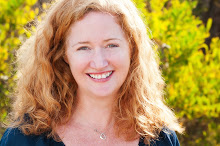
Have you met Maxabella? You'll love her. I do. The fact that we're related is entirely coincidental...
Anyhoo, the fabulous Weekend Rewind now has a new home with her. New look. New feel. New blogs to visit. New fun to be had.
It's even easier than before - you can simply link up your favourite post from the past week. How simple is that? The aim is to create a linky that brings together all the best blog posts into one spot. To make reading and visiting blogs a pleasure.
I'll be linking up each week and visiting as many blogs as I can. I'm looking forward to reading all your blogs - and finding some new ones too!
I do hope you'll join me over there!
Friday, July 12, 2013
Wednesday, July 10, 2013
Social Media for Writers #3: Facebook
Love it or hate it, there's no doubt that Facebook is an integral part of our lives these days - which is why writers can't really afford to ignore it (much as we may wish to do so).
I've had a complicated relationship with Facebook over the years. I got on to it just to see what it was all about - and then promptly lost interest. When I started my blog, however, I received a lot of 'friend' requests from other bloggers and readers - and had to make a decision about how much I wanted to share with the world.
The answer, in my case, was 'not much'. So I made another decision (phew, so many!) to set up a page for the blog so that I could connect with my cyber-friends there and keep my profile page set to 'so private it's hard to find'. The trouble with the page, however, was that it was a Life In A Pink Fibro page... which made it hard for people who were looking for 'Allison Tait' to find it.
Cue: the Allison Tait Facebook page was born.
For several months I faffed about with both, but it became increasingly hard work. So I made one final decision (please, let it be over soon) to consolidate onto one page - Allison Tait - which was agony because I had built a lovely number of likers at the Fibro and had to, really, start all over again.
The pain.
But I'm still there at Allison Tait, feeling comfortable, loving the fact that I can 'chat' to people about all manner of things, from writing to tv shows to, well, one of my most popular comment threads ever was about washing in cold water, but we won't talk about that.
Anyhoo. To me, Facebook is about the 'club' vibe that you get when a whole lot of people come together. And I love that. But I thought I'd ask an expert about the best way for writers to use Facebook to actually, you know, sell books.
Nathan Bransford is the author of Jacob Wonderbar and the Cosmic Space Kapow (Dial, May 2011), Jacob Wonderbar for President of the Universe (Dial, April 2012) and Jacob Wonderbar and the Interstellar Time Warp (Dial, February 2013). He was formerly a literary agent with Curtis Brown Ltd. and is now the social media and programming manager at CNET. He lives in Brooklyn - and, you know, knows his stuff.
Fortunately for me, he's also very friendly - and happy to answer random questions!
Will Facebook help me to sell books? How?
Nathan Bransford: "Yes, definitely. Facebook (and social media in general) isn't going to be the difference between selling zero copies and being a bestseller, but it is a very good avenue to help readers feel more connected with authors and for people to discover new books."
Do I need an author page as well as a 'profile'?
NB: "This really depends on whether you want to keep your presence as an author completely separate from your presence as an individual. Authors can either choose to have a totally separate Facebook page, which can be a little challenging because you have to get people to like it, or allow people to follow your public posts on your personal profile. I personally chose the latter. I find it easier to manage one presence.
"One thing I would recommend, however, is having a Facebook page for your individual books. When people will like these they will show up in people's list of likes, which is a good way of spreading the word about your books."
Do I need huge numbers of friends/followers for it to work?
NB: "It certainly helps, but in order to find a huge number of followers you have to start somewhere!"
What kind of content should I be posting?
NB: "This is totally up to you, but I find that the things that work best are the types of content and announcements that your friends and followers find genuinely useful. Yes, occasionally you have to self-promote to get the word out about your work, but otherwise it's better to think about what you can do for your friends and followers and not what they can do for you."
Top three tips for making the most of Facebook
1) Be authentic
2) Don't ever make people feel spammed
3) Have fun with it
Biggest mistakes authors can make on Facebook
NB: "The absolute biggest mistake is viewing it as simply a way of blasting out your books and your reviews. If all you're doing are self-serving announcements people won't find much value from your feed and they won't feel connected to you personally. Instead, look at it as a way of providing value and interacting with people."
Five authors you think are doing Facebook well – and why
1) Tahereh Mafi: She does a great job of providing a mix of behind-the-scenes looks of her tours along with great images and personal updates.
2) Cynthia Leitich Smith: Cynthia is an example of an author who provides incredible value for her followers. Her Facebook page is a mix of blog posts, events and things that any aspiring author would find valuable.
3) Gretchen Rubin: Gretchen really "gets" Facebook. She asks questions and engages with her followers with a mix of links and photos.
4) Kami Garcia: Kami does a great job of mixing it up with advice, news, photos, and much more.
5) Nicholas Kristof: Nicholas Kristof is more of a journalist than a traditional author, but he sets the gold standard for a Facebook presence. It's a terrific mix of commentary, interesting links, and glimpses into his travels.
You can find out more about Nathan and his fabulous books for kids on his website - and you should definitely say hello on Twitter and Facebook!
If you enjoyed this post, don't miss Social Media for Writers #1: Blogging and Social Media for Writers #2: Twitter.
What are your thoughts on Facebook - love or loathe?
I've had a complicated relationship with Facebook over the years. I got on to it just to see what it was all about - and then promptly lost interest. When I started my blog, however, I received a lot of 'friend' requests from other bloggers and readers - and had to make a decision about how much I wanted to share with the world.
The answer, in my case, was 'not much'. So I made another decision (phew, so many!) to set up a page for the blog so that I could connect with my cyber-friends there and keep my profile page set to 'so private it's hard to find'. The trouble with the page, however, was that it was a Life In A Pink Fibro page... which made it hard for people who were looking for 'Allison Tait' to find it.
Cue: the Allison Tait Facebook page was born.
For several months I faffed about with both, but it became increasingly hard work. So I made one final decision (please, let it be over soon) to consolidate onto one page - Allison Tait - which was agony because I had built a lovely number of likers at the Fibro and had to, really, start all over again.
The pain.
But I'm still there at Allison Tait, feeling comfortable, loving the fact that I can 'chat' to people about all manner of things, from writing to tv shows to, well, one of my most popular comment threads ever was about washing in cold water, but we won't talk about that.
Anyhoo. To me, Facebook is about the 'club' vibe that you get when a whole lot of people come together. And I love that. But I thought I'd ask an expert about the best way for writers to use Facebook to actually, you know, sell books.
Nathan Bransford is the author of Jacob Wonderbar and the Cosmic Space Kapow (Dial, May 2011), Jacob Wonderbar for President of the Universe (Dial, April 2012) and Jacob Wonderbar and the Interstellar Time Warp (Dial, February 2013). He was formerly a literary agent with Curtis Brown Ltd. and is now the social media and programming manager at CNET. He lives in Brooklyn - and, you know, knows his stuff.
Fortunately for me, he's also very friendly - and happy to answer random questions!
Will Facebook help me to sell books? How?
Nathan Bransford: "Yes, definitely. Facebook (and social media in general) isn't going to be the difference between selling zero copies and being a bestseller, but it is a very good avenue to help readers feel more connected with authors and for people to discover new books."
Do I need an author page as well as a 'profile'?
NB: "This really depends on whether you want to keep your presence as an author completely separate from your presence as an individual. Authors can either choose to have a totally separate Facebook page, which can be a little challenging because you have to get people to like it, or allow people to follow your public posts on your personal profile. I personally chose the latter. I find it easier to manage one presence.
"One thing I would recommend, however, is having a Facebook page for your individual books. When people will like these they will show up in people's list of likes, which is a good way of spreading the word about your books."
Do I need huge numbers of friends/followers for it to work?
NB: "It certainly helps, but in order to find a huge number of followers you have to start somewhere!"
What kind of content should I be posting?
NB: "This is totally up to you, but I find that the things that work best are the types of content and announcements that your friends and followers find genuinely useful. Yes, occasionally you have to self-promote to get the word out about your work, but otherwise it's better to think about what you can do for your friends and followers and not what they can do for you."
Top three tips for making the most of Facebook
1) Be authentic
2) Don't ever make people feel spammed
3) Have fun with it
Biggest mistakes authors can make on Facebook
NB: "The absolute biggest mistake is viewing it as simply a way of blasting out your books and your reviews. If all you're doing are self-serving announcements people won't find much value from your feed and they won't feel connected to you personally. Instead, look at it as a way of providing value and interacting with people."
Five authors you think are doing Facebook well – and why
1) Tahereh Mafi: She does a great job of providing a mix of behind-the-scenes looks of her tours along with great images and personal updates.
2) Cynthia Leitich Smith: Cynthia is an example of an author who provides incredible value for her followers. Her Facebook page is a mix of blog posts, events and things that any aspiring author would find valuable.
3) Gretchen Rubin: Gretchen really "gets" Facebook. She asks questions and engages with her followers with a mix of links and photos.
4) Kami Garcia: Kami does a great job of mixing it up with advice, news, photos, and much more.
5) Nicholas Kristof: Nicholas Kristof is more of a journalist than a traditional author, but he sets the gold standard for a Facebook presence. It's a terrific mix of commentary, interesting links, and glimpses into his travels.
You can find out more about Nathan and his fabulous books for kids on his website - and you should definitely say hello on Twitter and Facebook!
If you enjoyed this post, don't miss Social Media for Writers #1: Blogging and Social Media for Writers #2: Twitter.
What are your thoughts on Facebook - love or loathe?
Monday, July 8, 2013
Does anyone understand Linked In?
John Birmingham, whom I admire and enjoy greatly as a writer, shared a piece this morning about Facebook - specifically, about how he's breaking up with it. Because it used to be cool, and now it's not. And because it's stalking him. Sending message after message. And he can't really see the point anymore.
Well, I feel the same way about Linked In.
Only I can't really even begin to pretend my relationship with Linked In ever even got started (and, seriously, it was never cool, was it?). I signed up (why?), put up some basic work info (why?) and then promptly forgot the whole thing.
Except I can't forget it. I can't. Because Linked In takes up more room in my Inbox than anyone (or anything) else. People who want to connect with me. People that Linked In thinks I should connect with. Random emails about other people's jobs. Occasional emails to let me know that someone has changed jobs. Endorsements and connections and who knows what the heck else. It's like being at one of those awful business networking evenings where people throw business cards at you and then run off to talk to someone more interesting.
To me, Linked In is that annoying guy in the open plan office. You know. The one who constantly pops his head over the partition for an inane conversation about something you have absolutely no interest in. You want to hit him over the head, but you know that, somehow, it might be a career-limiting move. And so you don't.
Why am I there? Why are you there?
How can I break free?
Are you on Linked In? Can you explain it to me?
*In other news, the new book for the Pink Fibro Book Club has been announced. This month, we're reading The Death of Bees by Lisa O'Donnell. Join in the fun!
Well, I feel the same way about Linked In.
Only I can't really even begin to pretend my relationship with Linked In ever even got started (and, seriously, it was never cool, was it?). I signed up (why?), put up some basic work info (why?) and then promptly forgot the whole thing.
Except I can't forget it. I can't. Because Linked In takes up more room in my Inbox than anyone (or anything) else. People who want to connect with me. People that Linked In thinks I should connect with. Random emails about other people's jobs. Occasional emails to let me know that someone has changed jobs. Endorsements and connections and who knows what the heck else. It's like being at one of those awful business networking evenings where people throw business cards at you and then run off to talk to someone more interesting.
To me, Linked In is that annoying guy in the open plan office. You know. The one who constantly pops his head over the partition for an inane conversation about something you have absolutely no interest in. You want to hit him over the head, but you know that, somehow, it might be a career-limiting move. And so you don't.
Why am I there? Why are you there?
How can I break free?
Are you on Linked In? Can you explain it to me?
*In other news, the new book for the Pink Fibro Book Club has been announced. This month, we're reading The Death of Bees by Lisa O'Donnell. Join in the fun!
Friday, July 5, 2013
Weekend Rewind #7 (limited edition): Blogging
It's the end of week one in the school holidays and I'm feeling slightly shell-shocked - as, I'm sure, is every other parent in the land. I'm squeezing this post in while Mr9 watches Superman on DVD and Mr6 creates comics in the other room, whistling the Batman theme the whole time.
Lot of super-hero action round these parts at the moment. Lot of super-hero action.
So I've decided to keep it simple this week. The theme for the Weekend Rewind is: Blogging.
Any blog post you've ever written that mentions the word blogging, is about blogging or has overtones of blogging will do.
The rules, such as they are: Link up an old post for some new comment love. Visit other links in the Rewind to share the comment love. And if we're not already friends on Facebook, come and say hello.
Next week, the Weekend Rewind will be receiving a little shake-up, designed to keep it fun, fresh and interesting. Intrigued? Stay tuned.
In the meantime, ready, set... Rewind!
Lot of super-hero action round these parts at the moment. Lot of super-hero action.
So I've decided to keep it simple this week. The theme for the Weekend Rewind is: Blogging.
Any blog post you've ever written that mentions the word blogging, is about blogging or has overtones of blogging will do.
The rules, such as they are: Link up an old post for some new comment love. Visit other links in the Rewind to share the comment love. And if we're not already friends on Facebook, come and say hello.
Next week, the Weekend Rewind will be receiving a little shake-up, designed to keep it fun, fresh and interesting. Intrigued? Stay tuned.
In the meantime, ready, set... Rewind!
Wednesday, July 3, 2013
Social Media for Writers #2: Twitter
I love Twitter. I do. And that is why it is featuring in this, the second in our series on Social Media for Writers. When I started this blog three and a half years ago, I joined Twitter almost immediately. I'd been told it was a great way to meet other bloggers and get my posts 'out there'.
So I signed up, opened it up and... ran screaming from the room. How was I ever supposed to do this? Who should I follow? How would I get anyone to talk to me? I ended up following a whole lot of celebs, most of whom tweeted inane things at me, and nobody wanted to talk to me.
So I left.
A few months later, under pressure from friends who know about these things, I went back in there. This time, I looked for people whose blogs I'd been reading. Then I looked to see who they were following and followed them. I followed people who tweeted great links about writing. I followed writers. And I, timidly at first, got involved in their conversations. I learned the lingo and I learned to love hashtags. I still love hashtags. Hashtags are a fine art.
One of the people I met on Twitter in those (second) early days was Kerri Sackville. I could see straight away that Kerri was good at Twitter. She had a great mix of witty, pithy tweets that could be (and were) retweeted easily, along with conversation, humour and general, well, Kerri-ness. I take great pride in the fact that one of our Tweetversations led to the publishing of her first book (When My Husband Does The Dishes...).
Today, Kerri is writing her third book, along with countless columns, articles and blog posts. She is a lively speaker (we have appeared together on several panels, so I should know...), has been on the tele a lot (Sunrise, Mornings on Channel 9, The Morning Show on 7) and is currently a regular panelist on The Daily Edition (Channel Seven). She also teaches social media courses at the Australian Writers' Centre.
So, there was no-one better to ask here today to answer some questions about Twitter for Writers.
Will Twitter help me to sell books? How?
Kerri Sackville: "Yes, absolutely. It is HARD to sell books these days. It's not just enough to have a great book. There are hundreds of great books out there. You need publicity. Every author gets assigned a publicist for about six weeks for every book release (unless you're a huge name author, in which case your books sell themselves anyway). The more you can do to promote yourself the better. Developing a Twitter following helps to get you name (brand) recognition so that a) people will notice your name in a bookstore and be more likely to pick up your book, and b) people will be aware of your book from Twitter and may take steps to seek it out themselves."
Do I need huge numbers of followers for it to work?
KS: "Obviously the more followers you have the better. But no, you don't need huge numbers. Books sell by word of mouth. Even if you have a few hundred followers, they can spread the word to their friends and followers, who will spread it to theirs etc etc. It's essentially pyramid selling online."
Top three tips for making the most of Twitter
1. Be funny, interesting, opinionated, or, preferably, all three.
2. Respond to EVERYONE who engages with you.
3. Get chatting to people - break in on conversations, reply to strangers, add to conversations. It's all about the words!
Biggest mistakes authors can make on Twitter
KS: "The biggest mistake ANYONE can make on Twitter is to try to sell their product before engaging with people. It is fine to give your books a plug, but you can only do this when you already have an engaged audience. So build a loyal following THEN plug your books, not the other way around."
Five authors you think are doing Twitter well
Kylie Ladd
Anita Heiss
Tara Moss
Kate Forsyth
Caitlin Moran
Fleur McDonald
Kerri Sackville is the author of When My Husband Does The Dishes... and The Little Book of Anxiety. Find Kerri at her blog Life And Other Crises, say hello on Facebook or, of course, on Twitter!
If you enjoyed this post, you might also like Social Media for Writers #1: Blogging, and check out my list of 50 of the Best Australian Writers and Authors to follow on Twitter.
So I signed up, opened it up and... ran screaming from the room. How was I ever supposed to do this? Who should I follow? How would I get anyone to talk to me? I ended up following a whole lot of celebs, most of whom tweeted inane things at me, and nobody wanted to talk to me.
So I left.
A few months later, under pressure from friends who know about these things, I went back in there. This time, I looked for people whose blogs I'd been reading. Then I looked to see who they were following and followed them. I followed people who tweeted great links about writing. I followed writers. And I, timidly at first, got involved in their conversations. I learned the lingo and I learned to love hashtags. I still love hashtags. Hashtags are a fine art.
One of the people I met on Twitter in those (second) early days was Kerri Sackville. I could see straight away that Kerri was good at Twitter. She had a great mix of witty, pithy tweets that could be (and were) retweeted easily, along with conversation, humour and general, well, Kerri-ness. I take great pride in the fact that one of our Tweetversations led to the publishing of her first book (When My Husband Does The Dishes...).
Today, Kerri is writing her third book, along with countless columns, articles and blog posts. She is a lively speaker (we have appeared together on several panels, so I should know...), has been on the tele a lot (Sunrise, Mornings on Channel 9, The Morning Show on 7) and is currently a regular panelist on The Daily Edition (Channel Seven). She also teaches social media courses at the Australian Writers' Centre.
So, there was no-one better to ask here today to answer some questions about Twitter for Writers.
Will Twitter help me to sell books? How?
Kerri Sackville: "Yes, absolutely. It is HARD to sell books these days. It's not just enough to have a great book. There are hundreds of great books out there. You need publicity. Every author gets assigned a publicist for about six weeks for every book release (unless you're a huge name author, in which case your books sell themselves anyway). The more you can do to promote yourself the better. Developing a Twitter following helps to get you name (brand) recognition so that a) people will notice your name in a bookstore and be more likely to pick up your book, and b) people will be aware of your book from Twitter and may take steps to seek it out themselves."
Do I need huge numbers of followers for it to work?
KS: "Obviously the more followers you have the better. But no, you don't need huge numbers. Books sell by word of mouth. Even if you have a few hundred followers, they can spread the word to their friends and followers, who will spread it to theirs etc etc. It's essentially pyramid selling online."
Top three tips for making the most of Twitter
1. Be funny, interesting, opinionated, or, preferably, all three.
2. Respond to EVERYONE who engages with you.
3. Get chatting to people - break in on conversations, reply to strangers, add to conversations. It's all about the words!
Biggest mistakes authors can make on Twitter
KS: "The biggest mistake ANYONE can make on Twitter is to try to sell their product before engaging with people. It is fine to give your books a plug, but you can only do this when you already have an engaged audience. So build a loyal following THEN plug your books, not the other way around."
Five authors you think are doing Twitter well
Kylie Ladd
Anita Heiss
Tara Moss
Kate Forsyth
Caitlin Moran
Fleur McDonald
Kerri Sackville is the author of When My Husband Does The Dishes... and The Little Book of Anxiety. Find Kerri at her blog Life And Other Crises, say hello on Facebook or, of course, on Twitter!
If you enjoyed this post, you might also like Social Media for Writers #1: Blogging, and check out my list of 50 of the Best Australian Writers and Authors to follow on Twitter.
Monday, July 1, 2013
Fibro Book Club: The Rosie Project
It's fair to say that The Rosie Project is one of those word-of-mouth novels for good reason. There's a lot to talk about! For me, the book had the stamp of screenplay all over it, and not to the novel's detriment. As author Graeme Simsion revealed in his Facebook chat with the Fibro Book Club last week, the story began as a screenplay, morphed into a novel and has now been optioned as a screenplay again. Personally, I'd love to see it played out on the big screen - though we might need to have long conversations over who would play Don.
I thought the dialogue in the book was one of its absolute cornerstones. As a reader, I really enjoyed the interchanges, the different patterns of the voices, the zing of it all. As a writer, I just want to know how Graeme does it (I asked him in the chat whether he read it out loud, but, alas, he told me that after many years of screenwriting it just comes as second nature now - at which point I made a note to do a screenwriting course...)
It's a lovely, lovely book on so many levels - gentle humour, terrific pacing - but at the heart of it all is, of course, the inspired character of Don Tillman (who has his own Twitter handle if you'd like to say hello). For me, it was all driven by Don - what would he say next, what would he do next - and that made a relatively fanciful story feel real.
I'm happy to join in the general babble of happy, positive word-of-mouth that's driving this novel's success. I look forward to reading everyone else's thoughts here or over at the Fibro Club Facebook page (if you haven't joined us, come and say hello!)
PS: What do you think of this cover from the UK version of the book?
Who do you think should play Don in the movie?
I thought the dialogue in the book was one of its absolute cornerstones. As a reader, I really enjoyed the interchanges, the different patterns of the voices, the zing of it all. As a writer, I just want to know how Graeme does it (I asked him in the chat whether he read it out loud, but, alas, he told me that after many years of screenwriting it just comes as second nature now - at which point I made a note to do a screenwriting course...)
It's a lovely, lovely book on so many levels - gentle humour, terrific pacing - but at the heart of it all is, of course, the inspired character of Don Tillman (who has his own Twitter handle if you'd like to say hello). For me, it was all driven by Don - what would he say next, what would he do next - and that made a relatively fanciful story feel real.
I'm happy to join in the general babble of happy, positive word-of-mouth that's driving this novel's success. I look forward to reading everyone else's thoughts here or over at the Fibro Club Facebook page (if you haven't joined us, come and say hello!)
PS: What do you think of this cover from the UK version of the book?
Who do you think should play Don in the movie?