Wednesday, June 12, 2013
Fibro Q&A: Pippa Masson talks about the role of literary agents today
What do agents want? Do I need one? How do I get one? Where are they hiding?
I'm often asked these questions and my answer is usually "I have no idea" (well, not really, I point people here and here and even here, but that's not a good story opener, now is it?)
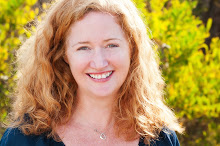
The truth is that the best way to find out what an agent is looking for is to ask them. So I invited Pippa Masson, who has been with literary agency Curtis Brown since 2001, and represents writers such as Kerri Sackville, Kylie Ladd, Hannah Kent, and many other fabulous authors, to pop in for a chat. (That's her, on the left - see how friendly she looks? Not scary at all.) Pippa represents a comprehensive client list of adult fiction and non-fiction, illustrated titles and children’s books and is currently Treasurer of the Australian Literary Agent’s Association. So she knows her stuff.
Given the changing nature of publishing, what do you think the role of the agent is today?
Pippa Masson: "The role of an agent is constantly changing and evolving. Things are a lot more hands-on than ever before for agents and some agents are now acting as publishers themselves – this is not something Curtis Brown Australia is doing but it gives you an idea of how the agency is changing. Today we have to be more strategic than ever before, more on top of the trends than ever before and experts in all models of publishing – of which there are new ones every month it seems!"
How many manuscripts do you see a year? How many new clients do you take on?
PM: "I see probably about 100 fully completed manuscripts a year and probably take on two to three. But then I probably see more like 1,500 – 2,000 sample manuscripts a year and I’d probably only take on the same amount as the fully completed manuscripts! That, of course, doesn’t take into account the manuscripts I am reading that my existing clients are sending to me."
How long does it take you to realise you're reading something that you'd be willing to represent? What is it that speaks to you?
PM: "I know I am going to take something on if I can’t stop reading it. If I take off my professional hat and just wear my readers hat I know it’s something for me. Voice is probably the key thing for me – but also the ability to tell a great story incredibly well."
What happens if you can't place a manuscript, despite your best efforts? Has it ever happened?
PM: "Sadly it does (and has) happened. We would always encourage the writer to put the unsold manuscript aside and focus on a new one."
Will you work with a writer to get a manuscript to publishable standard if it's almost there? Or do you reject outright if it's not right?
PM: "Yes, if we see a diamond in the rough we’ll always work with an author if we think it’s nearly there! There are not many manuscripts we take on that we feel are fully formed and ready to send out straight away."
You'll find more information about Pippa here, or you can follow her on Twitter. If you'd like to know more about what Pippa is looking for at the moment, sign up for my next newsletter (out June 15).
Are you looking for an agent?
[image: Nicholas Purcell]
Tuesday, June 11, 2013
Pink Fibro Club: Book of the month
Thanks to everyone who participated in the discussion of our last Book Club selection, Burial Rites. Most people chose to participate through the Facebook Group, so I'm thinking that's where we'll focus our Book Club efforts from now on. I'll post the book of the month here, and will also post my thoughts here on the first of the month and we'll go from there.
This month's selection is a complete change of pace from the bleak Icelandic winter. The Rosie Project, by Graeme Simsion, is one of those books that has generated every author's dream - word of mouth. It was the winner of the 2012 Victorian Premier's Literary Award for an unpublished manuscript and was published soon after in January 2013.
Also, I love the cover.
And in great news, Graeme has agreed to visit our Pink Fibro Club Facebook Group at 8pm on Tuesday June 25 for a live 'chat' about reading, writing and books. It's a great opportunity to ask any questions you might have about the book or about writing in general. Also, a fabulous opportunity to have a glass of wine with your fellow Fibro Club members. Like a real book club. Just saying.
Anyway, full details to come, but mark it in your diary and keep an eye on the Facebook group for further updates.
Do you judge a book by its cover? What makes a great cover?
This month's selection is a complete change of pace from the bleak Icelandic winter. The Rosie Project, by Graeme Simsion, is one of those books that has generated every author's dream - word of mouth. It was the winner of the 2012 Victorian Premier's Literary Award for an unpublished manuscript and was published soon after in January 2013.
Also, I love the cover.
And in great news, Graeme has agreed to visit our Pink Fibro Club Facebook Group at 8pm on Tuesday June 25 for a live 'chat' about reading, writing and books. It's a great opportunity to ask any questions you might have about the book or about writing in general. Also, a fabulous opportunity to have a glass of wine with your fellow Fibro Club members. Like a real book club. Just saying.
Anyway, full details to come, but mark it in your diary and keep an eye on the Facebook group for further updates.
Do you judge a book by its cover? What makes a great cover?
Friday, June 7, 2013
Weekend Rewind #3: Focus on family
Hello team!
As we stand on the cusp of a long weekend here in Fibrotown, I can only say "thank heavens". It's been a frantic few weeks around here and I'm looking forward to a little bit of cooking, a little bit of entertaining and a lot, make that a LOT, of weeding.
Mostly, though, I'll be hanging with my boys, all three of them. Which is why I'm making the theme of this weekend's Rewind: FAMILY.
The drill remains as per previous weeks of this, our limited-edition comeback of the world-famous Weekend Rewind linky. Pop up an old post (theme: family) for some new comment love, visit some of the other blogs to share the love, and... actually, that's it.
I'm looking forward to reading your offerings and sharing my favourites with the Fibro community.
Ready, set... REWIND.
As we stand on the cusp of a long weekend here in Fibrotown, I can only say "thank heavens". It's been a frantic few weeks around here and I'm looking forward to a little bit of cooking, a little bit of entertaining and a lot, make that a LOT, of weeding.
Mostly, though, I'll be hanging with my boys, all three of them. Which is why I'm making the theme of this weekend's Rewind: FAMILY.
The drill remains as per previous weeks of this, our limited-edition comeback of the world-famous Weekend Rewind linky. Pop up an old post (theme: family) for some new comment love, visit some of the other blogs to share the love, and... actually, that's it.
I'm looking forward to reading your offerings and sharing my favourites with the Fibro community.
Ready, set... REWIND.
Thursday, June 6, 2013
Fibro Q&A: Kirsten Krauth on voice, reviews and choosing a publisher
I first met author Kirsten Krauth a few years ago via her blog Wild Colonial Girl. She had moved from Sydney to Castlemaine, Victoria, and was eager to connect with other 'treechange' bloggers. We soon discovered that we had more than distance to the Big Smoke in common - as the editor of Newswrite, the newsletter for the NSW Writers' Centre, Kirsten's work lobbed into my mailbox every month! (If you are an aspiring writer and you haven't joined your state writing centre, I heartily recommend that you do so.)
This week, she launched her first novel just_a_girl, and I invited her to the Fibro to share her thoughts on writing a teenage voice (in an adult novel), whether being so immersed in the publishing world is inspiring or intimidating for her, and why she chose to go with a traditional publisher.
Given that key voice in your novel is teenage girl, why is this book published as 'adult fiction' rather than YA?
Kirsten Krauth: "When I was writing just_a_girl,
I never really thought about the final readership or the genre of the
book. I guess, starting out, I was just enjoying exploring characters
and seeing where they took me, and revelling in the chance to play with
language. As I started to redraft and realised that perhaps I had a
chance of publication, it was important to me that it was an adult
novel. I wanted the freedom to be able to put a 14-year-old girl (Layla)
in some challenging situations, to explore her sexuality, without
censoring myself.
There are also two other characters in the book,
Margot (Layla's mother) and Tadashi (a Japanese-Australian man she
encounters on the train). Their narratives are quite adult in theme:
Margot is in an evangelical church, battling ongoing depression;
Tadashi, too shy to initiate relationships, purchases a love doll to
talk to. UWA Publishing were terrific in that they understood that it
was a contemporary adult novel immediately - but this doesn't mean YA
readers and teens won't be interested in reading it."
What were the biggest challenges in using a teen voice as the key voice?
KK: "The
teen voice was the one that came most naturally to me and it was always
going to be the main narrative voice. I think teenagers are full of
contradictions and this can be challenging to relay because the
narration can jump from one opinion to another that doesn't quite match.
Also, Layla is quite precocious in many respects. I understand that as I
was like that myself.
There is a lot of diversity when it comes to
girls around 14 years. Some are keen to have quite adult relationships,
others still want fluffy toys on their beds; many fall in between. I
wanted to explore what it's like to be a teenage girl today - with the
impact of digital technologies, how many are exploring and experimenting
with sexuality in a world where the public/private divide is being
eroded. The challenge is doing that in a way that doesn't patronise or
talk down to girls, and yet looks at some of the issues."
KK: "Inspiring! Editing Newswrite
is the perfect job for me right now. Commissioning authors to write
articles on all aspects of writing and publishing is enormously helpful
when you are embarking on your own writing career at the same time.
Often as I edit the articles I have noted down tips and advice (from how
to do in-depth research to how to write a love poem!). We also have a
regular column, Writer on Writer, where authors choose the writer who
has had the most powerful impact on them. I love these kind of articles
and my favourites have been Benjamin Law on Zadie Smith and Emily
Maguire on Graham Greene (there have been many others!).
"I only recently
did my first book reviews for Sydney Morning Herald and the Australian
and, while I have been freelance writing for 15 years (and blogging on
books too), I was a bit daunted. I spent a long time writing those
reviews, and I got someone to double check the tone. But it's such a
rush to see your articles in the paper. I recently saw James Wood speak
at the Sydney Writers' Festival and I'd give anything to be a full-time
literary critic (writing novels too, of course)."
Given your submersion in the publishing world, what made you choose to go with a 'traditional' publisher rather than self-publishing your book?
KK: "This
is a great question. I actually had made a deal with myself. I would
try for two years to get the manuscript published and if that didn't pan
out, I would go the self-publishing route. Really, I wanted to hold the
book in my hand. I am passionate about books and, while I'm quite happy
in the digital sphere and will read ebooks too, I wanted to see my work
in book format, with a cover; something I could hold.
"I was lucky that
Teri-ann White at UWA Publishing read a few versions of the novel, saw
its potential, kept encouraging me while I fleshed it out, and then was
keen to publish ... UWAP have always been terrific in promoting the work
of new writers, and are not afraid to experiment a bit and take risks
(increasingly rare in traditional publishing these days).
"It was also
really important to me, as an editor, to go through the editing process
with someone else. I saw myself as a beginner (this was my first novel)
and I wanted to learn more about structure and characterisation in
particular, and going through an edit with a publisher gives you a crash
course in that...It's also good to have someone help you with the
marketing and promoting process."
KK: "Increasingly
the pressure is on authors to promote their own work and most will take
this on, because they want to sell their books! Sometimes I find it
fun, other times it is hard slog. I blog at Wild Colonial Girl
and I've really enjoyed that because I tend to write about various
subjects (film, TV, motherhood, other writers, books I've loved, digital
space, writing mothers series). I think if the blog was just about
promoting my book and writing, I would find it exhausting and dull after
a while (that said, this month, as my novel has just been published,
that WILL be the focus).
"I think Twitter, Facebook, Pinterest, Goodreads, all
have their place, but as a mum of two small kids, more and more I feel
like I want to focus on one thing at a time, and not be continually
distracted. So I've banned myself from social media when I'm looking
after my children, and try to do it all on my working days (which, of
course, means limited time).
"The best thing about social media and
blogging is the connections you make with other people. The comments on
my blog posts have always been positive and often profound, and it
thrills me to find out what other people are thinking about certain
issues, to connect with people who still love to read, and even meet
those people in the flesh and form lasting friendships."
To win a copy of just_a_girl, leave a comment below sharing your favourite memory of being 14 years old (closes Friday 14 June, 2013, 5pm).
Monday, June 3, 2013
Fibro Book Club: Burial Rites
As head prefect of the Fibro Club, I now declare this meeting open. Everyone have their glass of wine and their thoughts in order? Excellent.
I've had several actual, real life conversations about our book, Burial Rites, over the past week. We all agreed that we knew from page one that it wasn't going to end well. When the book is about the last person executed in Iceland, you know you're not looking at a happily ever after. But somehow that didn't seem to matter.
The reason I chose this book as our first selection was that it is one of those books. Debut author. International two-book deal worth $1 million. This book had something going on. Everyone said so.
There is no denying that there is a lot of grim in Hannah Kent's book. A lot of cold. One of the people I spoke to this week didn't feel that there were enough words to really convey the sense of place, but I really enjoyed the sparse nature of Kent's prose. To me, the sense of place built, word by word, page by page, along with the intimacy as the inevitability of the story inched forward, revealing itself under all that snow.
"Slow" was another word that came up a lot. It is a slow tale and, yes, a bleak one in many ways, but I found it intensely interesting. Strong female characters. An otherness in the setting. Historic detail. And, always, that slowly unravelling story.
Ultimately satisfying - for me, if not for Agnes.
What did you think? Share your thoughts here or pop over to the Fibro Club Facebook page to join the discussion.
I've had several actual, real life conversations about our book, Burial Rites, over the past week. We all agreed that we knew from page one that it wasn't going to end well. When the book is about the last person executed in Iceland, you know you're not looking at a happily ever after. But somehow that didn't seem to matter.
The reason I chose this book as our first selection was that it is one of those books. Debut author. International two-book deal worth $1 million. This book had something going on. Everyone said so.
There is no denying that there is a lot of grim in Hannah Kent's book. A lot of cold. One of the people I spoke to this week didn't feel that there were enough words to really convey the sense of place, but I really enjoyed the sparse nature of Kent's prose. To me, the sense of place built, word by word, page by page, along with the intimacy as the inevitability of the story inched forward, revealing itself under all that snow.
"Slow" was another word that came up a lot. It is a slow tale and, yes, a bleak one in many ways, but I found it intensely interesting. Strong female characters. An otherness in the setting. Historic detail. And, always, that slowly unravelling story.
Ultimately satisfying - for me, if not for Agnes.
What did you think? Share your thoughts here or pop over to the Fibro Club Facebook page to join the discussion.
Friday, May 31, 2013
Weekend Rewind (Limited Edition) #2: Writing week
I'm going in early with the Rewind this week. I have a house to clean. In high heels (long story, but I'm going to a ball tomorrow night and will be wearing heels for the first time in ages, so I'm practising... as you do). So, here I am.
Thanks to everyone who linked up last week - it was SO good to see so many familiar faces, and to meet some lovely new ones too. This week, I thought I'd mix things up a bit (you know how I love a mixed tape) and rather than going with February as our theme, which might be a little ... expected ... (after January last week), we're going to do something else.
The theme for this week is ... WRITING.
So, you can give me a post about writing or some of your best-ever writing, you choose. Try to keep to the theme though, just because I get such a jolt when I visit the next link and it's not following the vibe.
Usual schtick applies: pop up your old post for some new comment love, then (please) visit some other blogs to leave some comment love, and like/follow me on Facebook or Twitter just so you can keep up with the Rewind notifications. If I can't comment on your post due to technical issues (as per last week's Disqus/iPad fiasco) I like to say hi in Twitter or Facebook to let you know I've visited, so make it easy for me (please).
All right, must go, the vacuuming awaits (oh, my glamorous life).
Ready, set...
Rewind.
Thanks to everyone who linked up last week - it was SO good to see so many familiar faces, and to meet some lovely new ones too. This week, I thought I'd mix things up a bit (you know how I love a mixed tape) and rather than going with February as our theme, which might be a little ... expected ... (after January last week), we're going to do something else.
The theme for this week is ... WRITING.
So, you can give me a post about writing or some of your best-ever writing, you choose. Try to keep to the theme though, just because I get such a jolt when I visit the next link and it's not following the vibe.
Usual schtick applies: pop up your old post for some new comment love, then (please) visit some other blogs to leave some comment love, and like/follow me on Facebook or Twitter just so you can keep up with the Rewind notifications. If I can't comment on your post due to technical issues (as per last week's Disqus/iPad fiasco) I like to say hi in Twitter or Facebook to let you know I've visited, so make it easy for me (please).
All right, must go, the vacuuming awaits (oh, my glamorous life).
Ready, set...
Rewind.